Reckoning with Cesar Chávez | Reweaving Our Stories
I’m a Chicana Jew; my multi-cultural identity has been front and center for me during the Jewish High Holidays over the last two weeks. I skipped Rosh Hashanah services on September 12th. Instead, artist Pilar Agüero-Esparza and I co-facilitated a community conversation about Cesar Chávez’ deeply complicated legacy at our local library, La Biblioteca Latinoamericana. For me, this moment of reckoning fits perfectly with the Jewish tradition of seeking forgiveness and repairing relationships each new year. We practice teshuvah, an active process of looking back at mistakes, owning up to our actions, and committing to changing our behavior for the coming year.
We asked community members who gathered: “How do we hold two truths at once? How do we reconcile the fact that Chavez lead "el movimiento" that uplifted and liberated so many of our people while he also caused deep harm to so many women?”
Folks shared stories of working in the fields as children, trying to understand the complex political movement unfolding around them. Others talked about decades of teaching their students about Chavez’ vital role in Chicano history, now faced with imparting a more complicated truth. How do we teach our children about the importance of the farmworkers’ movement while addressing the fallibility of heroes on pedestals? How do we look back at history with clear eyes and re-contextualize/re-weave our stories without participating in the erasure of our own people from the history books?
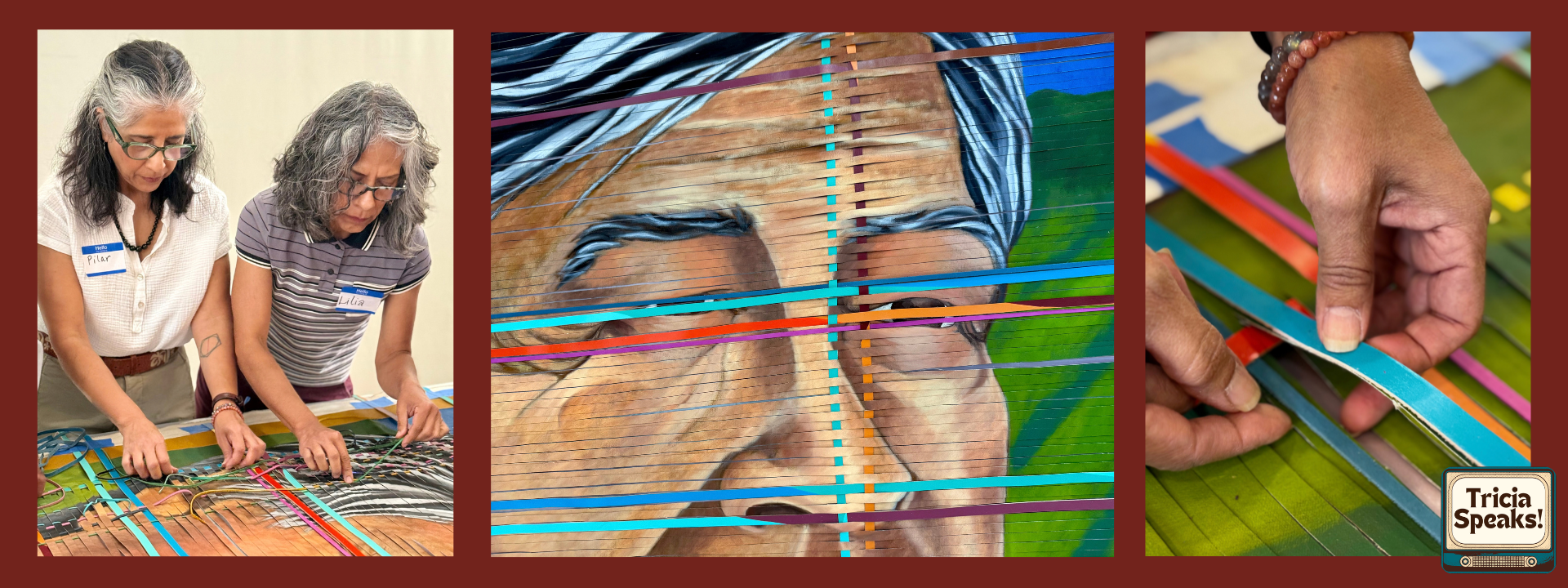
The second half of the day was dedicated to a communal weaving project. We set ourselves to “re-weaving” a mural panel that depicts Chavez as a “hero” painted by Pilar in 1998 that has hung in the library since. She writes:
“As I prepared the Chávez panel for the weaving sessions, creating a warp-like structure from the textile meant cutting into the image. The process was emotional for many reasons, but necessary to begin transforming the work. After making the cuts into the canvas, I was struck by the need to push his likeness into the background. To do this, I would have to cover part of Chávez's face with the leather lace. It was especially important to weaken his eyes. He needs to recede to the background so that the materials community members weave into the canvas can be foregrounded as the new tapestry layer takes shape.”
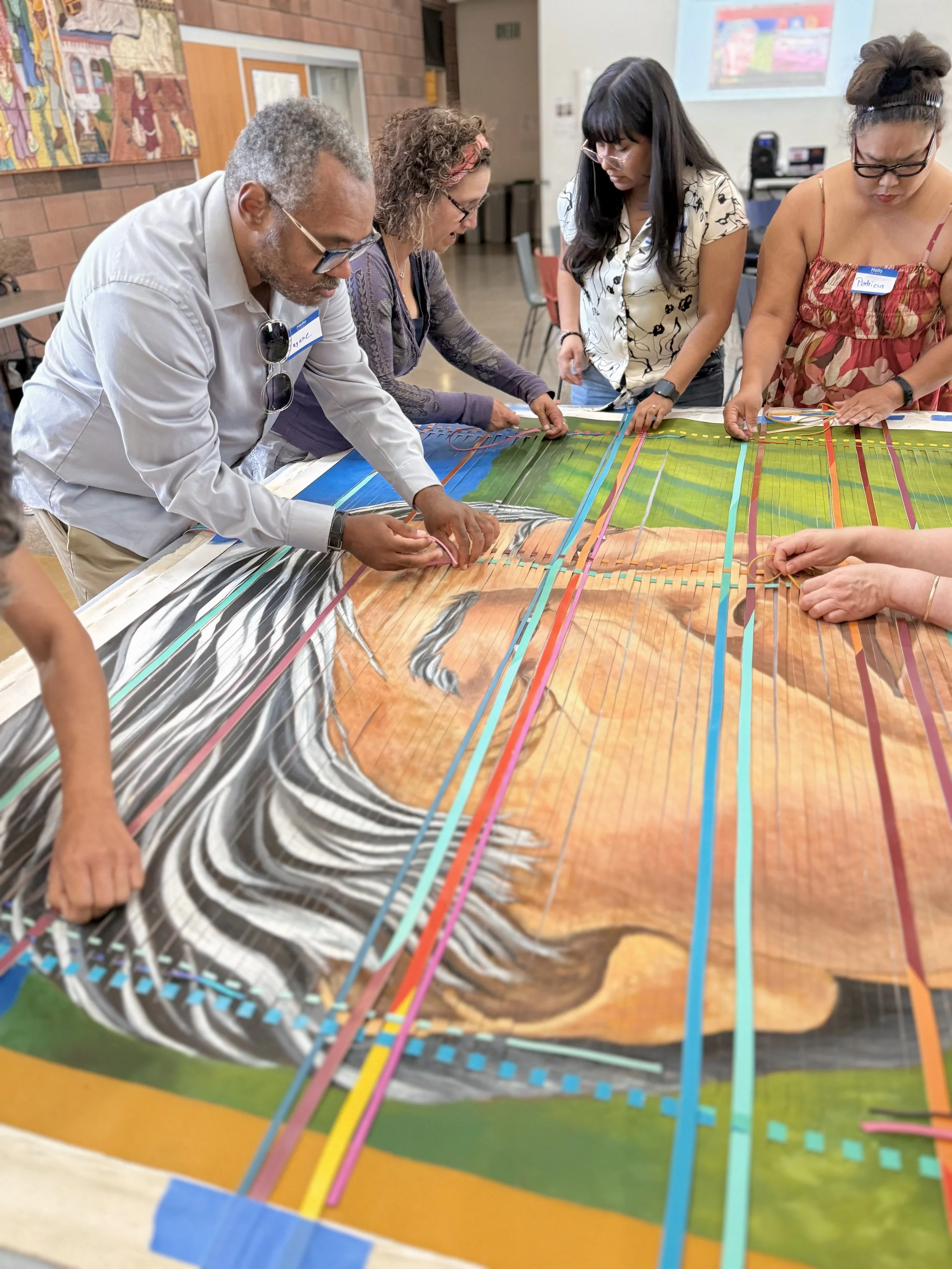
My hope is that this communal re-weaving process can become its own kind of teshuvah: not an erasure of Chávez, nor an attempt to undo the history of the UFW movement, but a return to the stories that have been ignored and hidden. This re-weaving process asks us to look directly at what has been broken, take responsibility for the harm, and imagine what might be repaired. When we weave all of our stories together, we actively create a more authentic tapestry of ourselves and who we hope to become.
Gratitude to the San José Public Library and the San Jose Office of Economic Development and Cultural Affairs for organizing these convenings. My participation in this reweaving process is born out of my longstanding friendship and collaborative relationship with Pilar, and is part of my “I Am/We Are” Creative Ambassadorship project for the City of San José.