Transformative justice + grappling with Cesar Chavez’ legacy as a “hero”
“A people who lose their history, lose their destiny.”
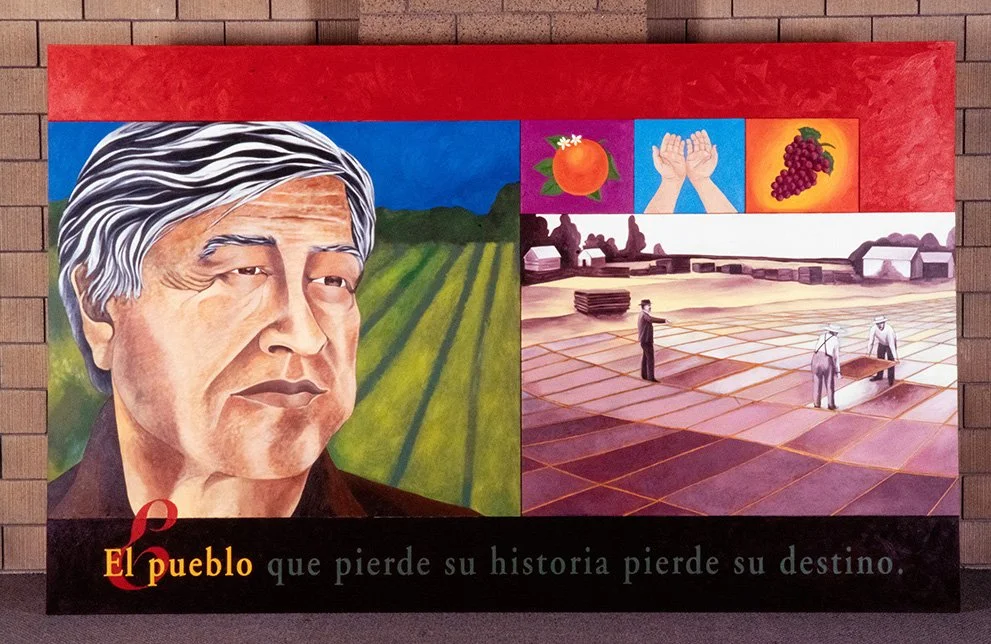
“Heroes and History” mural panel at the Biblioteca Latinoamericana branch at the San Jose Public Library in San José, CA
Last week, several members of our community in San Jose, California came together to grapple with the legacy of Cesar Chavez in shared public spaces. In March 2026, an investigative report by The New York Times revealed severe sexual abuse and rape allegations against labor leader and United Farm Workers co-founder Cesar Chavez, involving multiple women and minors. On this night, specifically, we talked about how to transform a mural created by my dear friend Pilar Agüero-Esparza at our local Biblioteca public library that honors Chavez as a “hero”.
Pilar designed the mural over 30 years ago around the themes of “dichos” (sayings). The dicho on the Chavez panel is “El pueblo que pierde su historia, pierde su destino” / A people who lose their history, lose their destiny.”
This concept was the perfect grounding for our complex, heart-rending dialogue about erasure of indigenous & Chicano stories, sexual assault, anger, cancel culture, healing and how to transform this moment into a new era of transformation that better represents all of us: women, farmworkers, artists, change makers - el pueblo de San Jose, rooted in the struggle and honoring our community values.
Pilar proposed a re-weaving of our stories, literally and figuratively, in which she’ll deconstruct the Chavez panel and invite the community to weave it together again. When she shared her exploratory sample images, many of us cried. Someone explained that Chavez is/will always be a role model for them, a real human they knew personally and an icon who symbolizes the concrete gains that resulted from the farmworkers’ movement. People spoke about being survivors of sexual abuse themselves and reflected on the complexities of maintaining relationships with family members who have harmed them. The passion and pain in the room were palpable as we talked about next steps.
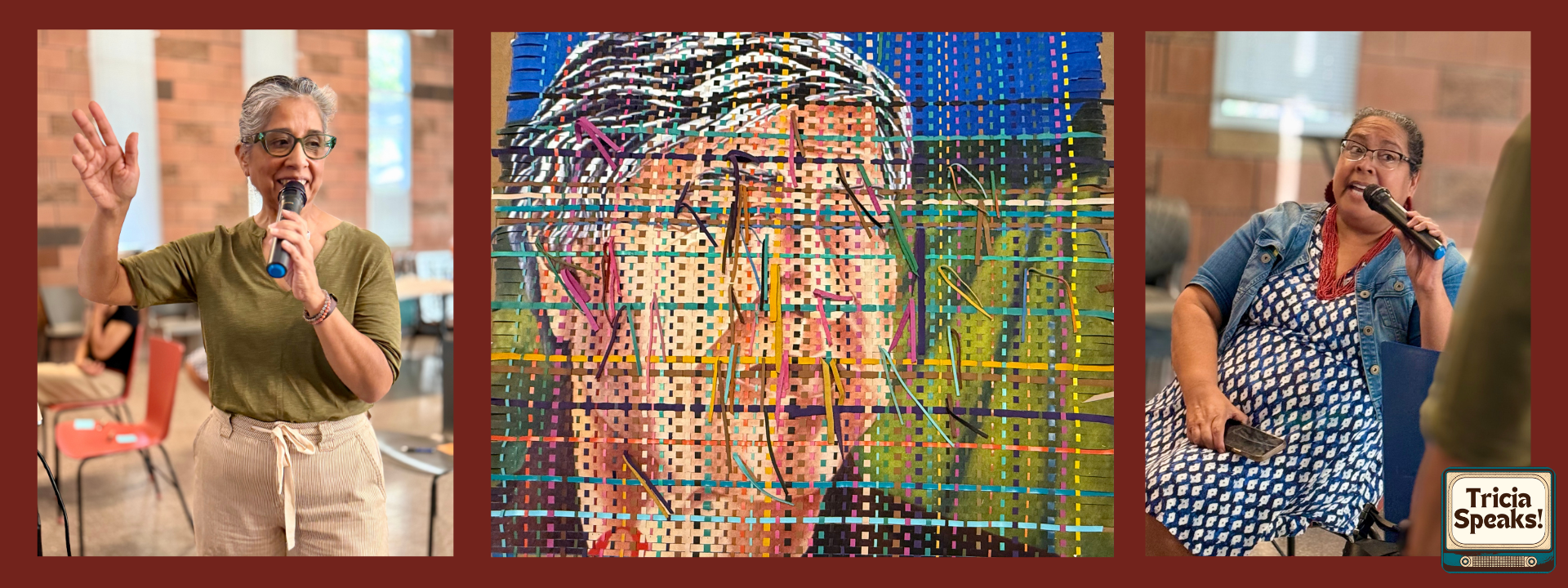
1. Pilar Agüero-Esparza shares her re-weaving proposal. 2. Sample re-weaving that maintains Cesar’s image. 3. Community member shares their insights
I attended the meeting not only in my role as a Creative Ambassador for the City of San José, but as an educator and a mother who lives in the neighborhood. I’ve spent countless hours with my children at that library, reading under those murals. I can begin to imagine the fruitful conversations that we can have with our kids when the updated version of the mural is reinstalled.
That night, I witnessed the healing power of transformative justice, a process that seeks to fix broken relationships while also changing the social structures and root causes that allowed the harm to happen.
I’m proud of Pilar for sparking this conversation with her art. I’m grateful to the San Jose Office of Economic Development and Cultural Affairs Public Art Program and the San José Public Library for understanding the importance of bringing us together for an ongoing process of dialogue and healing. I fervently hope these conversations will continue.